


Translation Services in the Public Sector: Lessons from the Welsh Language Challenge


Public services across the UK are expected to be accessible, inclusive and responsive to everyone in the communities they serve. As society becomes more diverse, this means communicating effectively in multiple languages, and doing so in real time. Nowhere is this challenge more visible than in Wales, where the legal requirement to treat the Welsh language no less favourably than English has created a blueprint for how other multilingual services might be delivered.
A Legal and Cultural Obligation
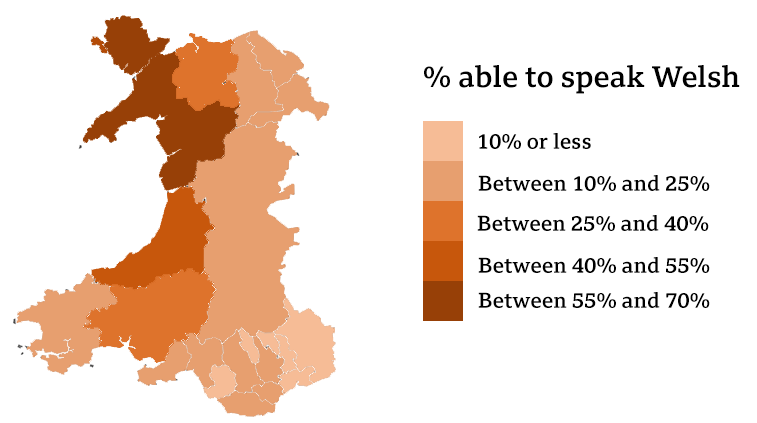
Welsh public sector organisations are legally required to provide services in Welsh under the Welsh Language (Wales) Measure 2011. This is not a courtesy or a translation added later. It is a core service standard.
Organisations must ensure that people can access housing advice, healthcare, social care and education in Welsh if they choose.
But Welsh is only one part of the picture. With increasing numbers of residents speaking Polish, Somali, Arabic, Urdu and Mandarin, many organisations must support ten or more languages to truly reflect their communities.
At the same time, equalities legislation such as the Equality Act 2010 and the Care Act 2014 reinforces the need to provide language support across England, Scotland and Wales. The requirement is clear: if a person cannot understand vital information about their care, their home or their legal rights, the service is not accessible.

The Pressure of Cost and Availability
Delivering this level of multilingual service is expensive and time consuming when using traditional interpreter services. Pre-booked interpreters may not be available in emergencies. On-demand language providers charge high fees, and call waiting times increase when staff are unable to communicate directly with the caller.
This becomes even more difficult out of hours. Many councils and health providers are expected to provide crisis response services twenty-four hours a day. This includes safeguarding, homelessness prevention and emergency healthcare. If someone cannot understand the questions they are being asked, or cannot explain their needs clearly, the result can be delay, distress and missed opportunities to help.
Working with Welsh Public Sector Organisations
HybrIT is actively working with public sector organisations in Wales to tackle the challenges of delivering multilingual services. The Welsh language presents a clear example of the complexity and importance of language accessibility, as it is protected by law and deeply rooted in national identity.
We are exploring how real-time AI translation can be integrated into existing communication platforms such as phone systems, video conferencing tools and web chat. These technologies have the potential to let service users choose the language they are most comfortable with, while allowing staff to engage in conversations that are translated instantly in both directions.
This method removes the need for pre-booked interpreters, shortens wait times and makes it possible to support multilingual communication even during high demand or outside of standard hours.
By focusing on Welsh, a language that is both legally required and culturally significant, we are helping organisations create a foundation that can be extended to meet the language needs of wider communities.
The Benefits We Aim to Deliver
Our aim is to help public sector bodies make full use of AI-powered translation tools. The outcomes we are working towards include:
Meeting Welsh Language Standards and other statutory requirements
Enabling effective support for residents during urgent or out-of-hours situations
Giving staff the ability to communicate clearly and confidently with all service users
Reducing language service costs through usage-based pricing
Supporting inclusive service delivery while maintaining respect for cultural heritage

This work shows that technology and tradition do not need to compete. Welsh language support provides a strong foundation for inclusive translation strategies that can be scaled across public services in any region.
This approach shows how heritage and innovation could work together. Supporting Welsh was not seen as a barrier, but as a foundation for better multilingual service delivery.
Moving Beyond Wales
While the Welsh experience is unique in some ways, it provides a valuable lesson for public sector bodies across the UK. Whether you are delivering children’s services in Birmingham, housing support in Glasgow or hospital triage in Manchester, the principles remain the same. Language support must be reliable, fast, inclusive and financially sustainable.
HybrIT helps public sector organisations integrate AI translation into their existing systems so they can:
Offer multilingual services across phone, email, video and chat
Comply with equality, care and language legislation
Reduce dependence on external interpreters
Provide better support around the clock
By using technology to remove language as a barrier, you can improve outcomes for your community and create services that work for everyone.
To learn how HybrIT can help your organisation overcome the challenges of translation services, you can get in touch with us or download our whitepaper for more insight.
📩 hello@hybrit.co.uk📞 0333 0156 701


